Category Archives: Circadian Rhythms

Testifying to the Texas Senate for Start School Later

February 5, 2019
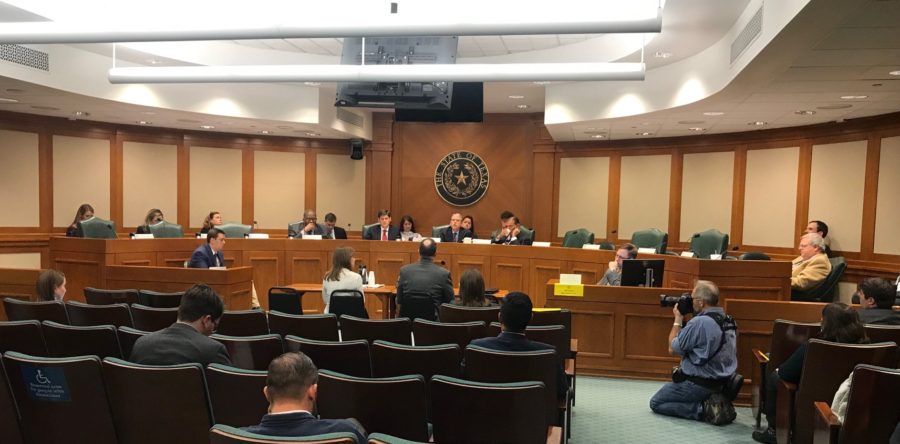
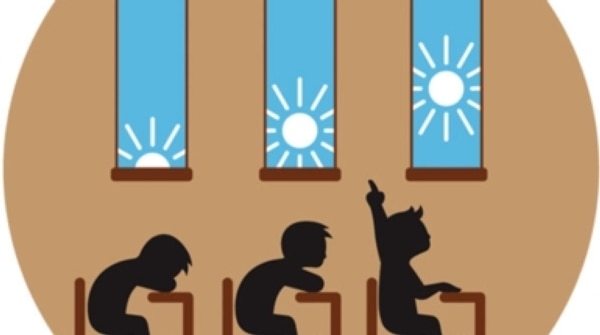
During the interim session, the Texas Senate Education Committee held hearings to evaluate the Texas Education Code. Start School Later Texas proposed that Section 28.082 of the Education Code be amended to state that all Texas public schools should start no earlier than 8:00 am. As the chapter leader for SSL Greater Austin, I testified about the public safety and mental health benefits of beginning the academic day later in the morning. Of course, I made…
More

My Letter to Governor Jerry Brown Regarding SB 328 For Later School Start Times

September 19, 2018
The Honorable Edmund G. Brown Jr. Governor, State of California State Capitol, First Floor Sacramento, CA 95814 RE: Senate Bill 328 – Request for Signature Dear Governor Brown: Please sign into law Senate Bill 328, a public health measure ensuring the health and safety of California adolescents. It would require the school day for middle schools and high schools to begin no earlier than 8:30 am by July 1, 2021. Frustrated by early school start…
More

Nobel Prize Awarded to Body Clock Researchers

February 23, 2018
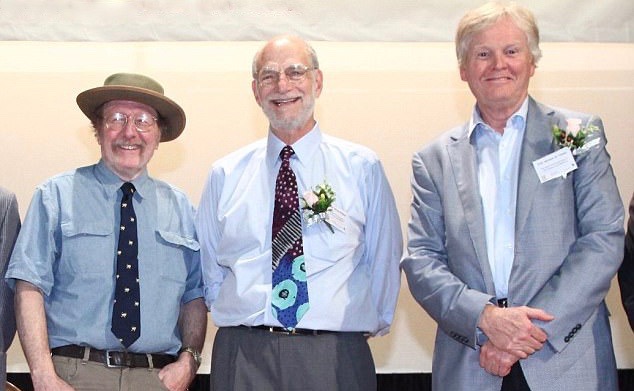
Validation ... at last. This year's Nobel Prize for Medicine was awarded to three American chronobiologists for their research on one of the genes that regulates the internal biological clock. The prestigious award will bring attention to how the human internal clock controls our circadian rhythms and therefore our sleep, and how some sleep disorders are physiological - not psychological  - problems. Drs. Jeffrey Hall, Michael Rosbash and Michael Young isolated the period gene, a…
More

Using 23&Me and Promethease To Detect Sleep and Circadian Rhythm Disorders

December 12, 2017
Since I was in my early twenties, I've suspected that my sleep disorders were genetic - inherited from my father's side of the family. Ten years ago, my suspicions were confirmed when UCSF Laboratories of Neurogenetics found "very interesting findings" regarding the 'night owl gene' in my genome. In the past year, I've learned more about my genes through 23&Me, a direct-to-consumer genetic test, and Promethease, a personal DNA health report service. 23&Me provides information on…
More

CRY1 – The First Gene Mutation for Delayed Sleep Phase Disorder Discovered!

November 13, 2017
Last month, Delayed Sleep Phase Disorder sufferers rejoiced as scientists announced the discovery of a mutation in the circadian gene, CRY1. This mutation slows the circadian clock, which controls behavior such as sleep/wake cycles. People with the “night owl” variant of CRY1 have a longer circadian cycle than most, causing them to stay awake later and have trouble getting up in the morning. The finding by The Rockefeller University substantiates what DSPD sufferers have long believed - that night owl tendencies are hardwired into one's genes.…
More

Circadian Rhythms, 101

June 25, 2017
Recently, there has been no shortage of news about circadian rhythms and sleep. Clearly, interest in this topic is growing - the New York Times article entitled 'Yes, Your Sleep Schedule Is Making You Sick' was one of the most emailed articles for the week. Before I dive into the latest research – which holds hope for Delayed Sleep Phase Syndrome sufferers – a quick primer on circadian rhythms is in order. A circadian rhythm is any bodily process that displays…
More

What Is Delayed Sleep Phase Syndrome?

June 15, 2017
Delayed sleep phase syndrome (DSPS) is a condition in which the body’s internal clock is delayed several hours behind what is considered normal. DSPS-ers can sleep normally and follow a consistent sleep schedule – just at a later time (such as 4 am to 11 am). As a circadian rhythm disorder (CRD), DSPS affects other daily rhythms such as those for body temperature, appetite, heart rate and blood pressure. DSPS is genetic; studies have linked it…
More