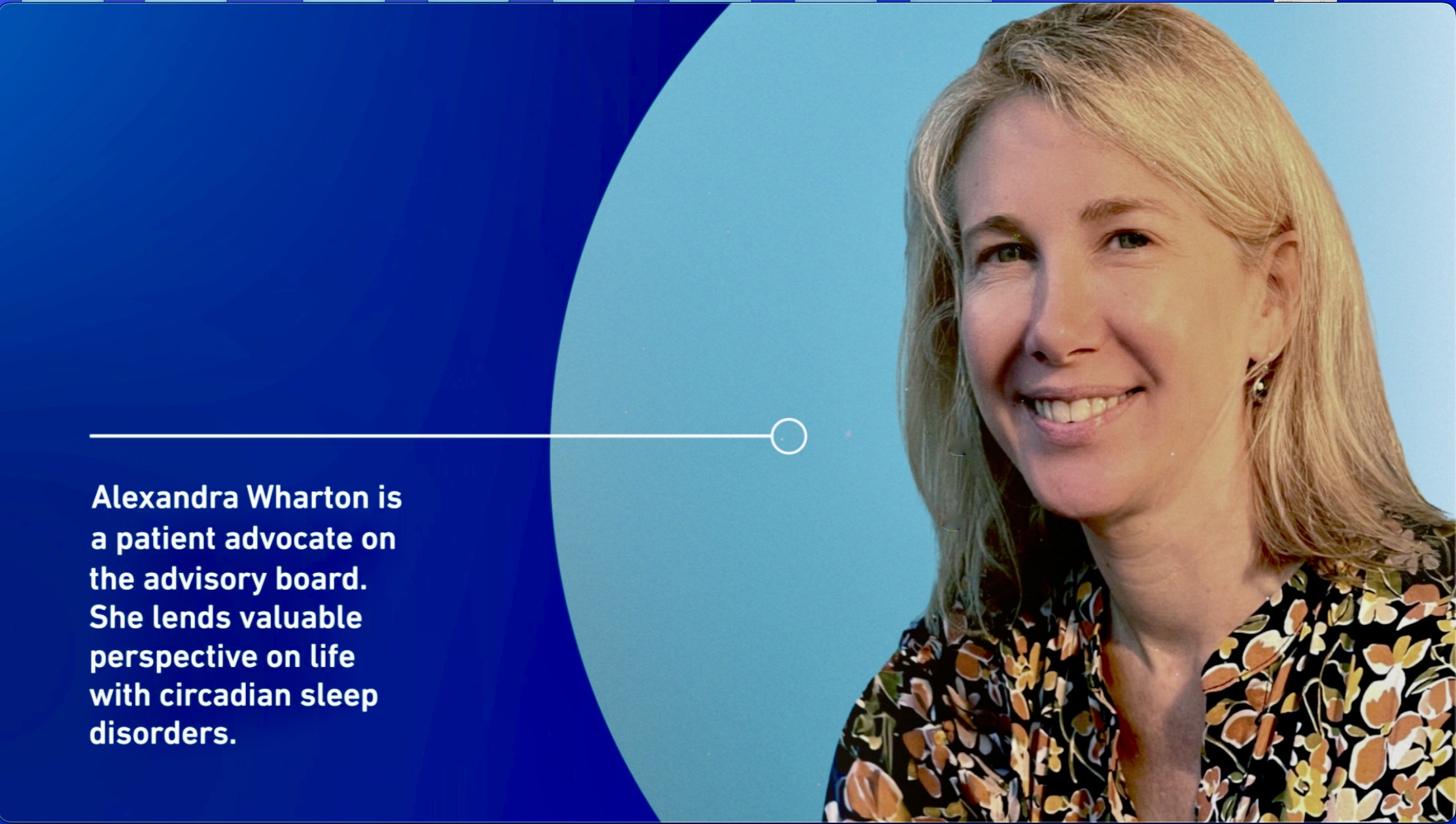
I completed my 4-year term on SDRAB last week. Here are some of the thoughts I shared with this amazing group of researchers, physicians and fellow patient advocates during my final meeting.
I’m very encouraged that in recent years there’s been an increase in awareness of Delayed Sleep Wake Phase Disorder, which is characterized by an inability to fall asleep naturally until at least 4 am. It affects at least 1 in 600 people.
Terms like “late chronotype” and “night owl” can be confusing – they could mean someone who naturally falls asleep after 12 midnight or “prefers” the evening or works overnight. This is different than someone who lives with actual DSPD.
We at Circadian Sleep Disorders Network advocate for a faster diagnosis for DSPD – which can be a life changing event for someone who has struggled for years.
We suggest a variety of screening methods such as standardizing the use of scales that inquire about chronotype – like the MEQ, MCTQ and PSQI – at regular – and not just at initial – patient visits.
We also recommend testing for biomarkers like melatonin and cortisol, and DNA testing for variants of clock genes. SDRAB had an enlightening discussion about this in December with Dr. John Hogenesch of Cincinnati Children’s Hospital.
There is no silver bullet for treating DSPD.
Treatments that are proven to be effective for shifting sleep earlier for some “late chronotypes / night owls” such as light therapy, phase delay chronotherapy, SSRIs, CBT or “stricter schedules” are not as effective for DSPD.
DSPD is a neurological condition that may be related to how an individual’s molecular clock (depending on their genetic makeup) syncs or is influenced by the rotation of the earth. There’s encouraging research happening in this area as we heard in Dr. Michael Sesma’s recent circadian talk about NIH Merit Award recipients’ work around the country.
Circadian rhythm sleep disorder patients must stop waking themselves up with stimulants in the morning and knocking themselves out with anticholinergics like diphenhydramine and some types of hypnotics and sedatives in the evening – especially day after day. Recently, there was an alarming study linking this to increased dementia.
Unfortunately this is common for CRD patients in order to have any sort of work, school, family or social life.
Hopefully – as awareness continues to build in the general public and medical community – accommodations for later start times at work and school (and starting ALL schools later) will become more accepted.
P.S. I was honored to be a spotlighted patient story as part of NHLBI’s 75th anniversary celebration in 2024. Below is an image from the video program.